How to stand out in college applications gets answered with the same tired advice: do more activities, take more AP classes, write about overcoming a challenge. None of that is what actually separates applications at selective schools. This guide covers what genuinely makes a file memorable, why depth beats a long resume, and how to build an application around something real instead of something impressive-sounding.

What Actually Makes an Application Stand Out?
What makes a college application stand out usually isn't what students assume. Grades and test scores are a baseline at selective schools, not a differentiator, since most applicants in the competitive pool already clear that bar. What separates similar transcripts is specificity.
| Weak Signal | Strong Signal |
|---|---|
| A long activity list with one line each | Two or three activities described in real detail |
| "Passionate about science" | A named project, question, or result |
| An essay about a generic life lesson | An essay only that student could have written |
| A prestigious-sounding program title | A finished piece of work you can describe |
None of the strong-signal column requires more activities. It requires more depth in fewer places.
Depth Beats Breadth

Depth over breadth college applications is a real trade-off, not a slogan. A student who spent two years on one specific project, going deep enough to explain a real decision they made along the way, reads as more credible than a student who joined eight clubs and led none of them meaningfully. Admissions readers process thousands of files. A specific, narrow story is what they remember; a long, generic list is what they skim past.
This doesn't mean quitting every activity that isn't your one deep interest. It means the application should make clear which one or two things you actually went deep on, instead of presenting everything with equal, shallow weight.
Your Essay Has to Be Specific, Not Impressive

Specific vs generic college application essays come down to one test: could a different student have written this same essay about a different experience? If yes, it's too generic. A story about "learning perseverance" from a sports injury reads the same as a thousand other essays with the names swapped. A story about the specific moment a dataset didn't match your hypothesis, and what you actually did next, couldn't have been written by anyone else.
Our guide to Ivy League essays covers how to build that kind of specific, personal narrative in more depth. The size of the accomplishment matters less than how precisely you can describe it.
A Finished Project Says More Than a Title
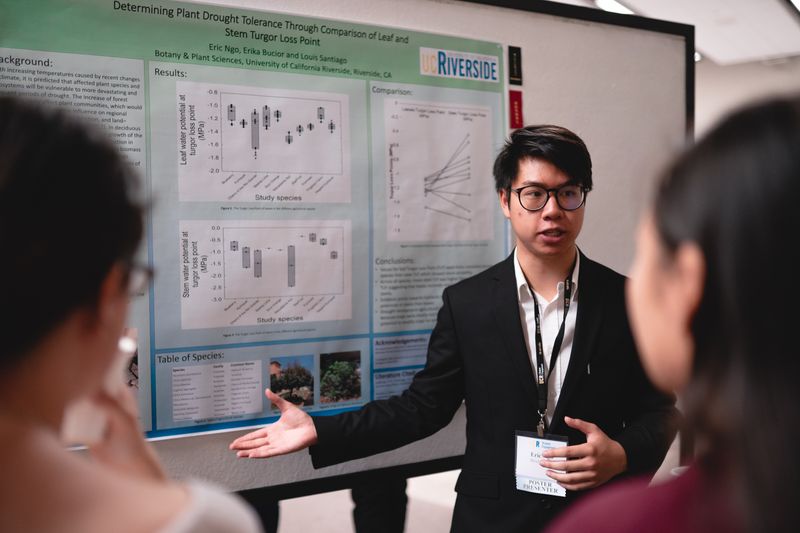
A college application differentiator that actually holds up under questioning is a finished piece of work, not a program name. A student who can explain their specific research question, walk through the method behind it, and describe what they'd change next time is demonstrating something a resume line can't fake. A student who lists a prestigious-sounding summer program with nothing to say about the actual work is demonstrating the opposite.
This is the whole premise behind original research as a differentiator: the finished project, not the name attached to it, is what an admissions reader can actually evaluate. If you haven't started one, our guide to how to start a research project in high school covers the process, and the Aspire Research Fellowship pairs you with a PhD-level mentor and a recent ISEF champion over 12 weeks to help you finish one you own from question to result. Over 20,000 students have gone through the program, with an acceptance rate of roughly 10%, open to grades 8 through 11.
How to Actually Build a Standout Application

- Pick the one or two things you're actually going deep on. Not everything you do needs to be a headline. One or two do.
- Finish something concrete in that area. A project, a paper, a result, not just ongoing participation.
- Cut activities that add length but no depth. A shorter list with real detail reads stronger than a long one that doesn't.
- Build your essay around a specific moment, not a general theme. If the essay could describe a different student's life, rewrite it.
- Make sure your extracurriculars and essay tell a consistent story. Our guide to extracurricular activities for a resume covers how to describe activities with the same specificity your essay needs.
Common Mistakes Students Make
Padding the activities list instead of deepening it. More lines with less detail is a net loss, not a gain.
Writing an essay about the most impressive thing instead of the most specific thing. MIT's admissions blog has written for years about looking for genuine fit and specificity over polish, a philosophy shared broadly across selective admissions offices, not just one school.
Assuming a program's name does the work. The National Association for College Admission Counseling publishes general guidance on what holistic review actually weighs, worth reading directly if you're building your list of what to emphasize.
Frequently Asked Questions
How do you actually stand out in a college application?
By showing depth in one specific area rather than breadth across many. A student with one finished project or a sustained, specific interest reads as more credible than a student with a long list of shallow activities and no clear thread connecting them.
Do grades and test scores alone make you stand out?
No. Strong grades and scores are a baseline expectation at selective schools, not a differentiator, since most applicants at that level have them too. What separates applicants with similar academic records is what they did with a specific interest beyond the transcript.
What do admissions officers actually notice?
Specificity. A precise story, a named project, a concrete result, or a particular detail that reveals genuine interest stands out far more than broad claims like "passionate about science" or "natural leader" with nothing behind them.
Does having more extracurricular activities help you stand out?
Not by itself. A long list of activities with one line each usually reads as resume padding. Two or three activities with real depth and a specific result say more than eight activities listed without detail.
How does a research project help you stand out?
A finished research project gives you something concrete to describe: a specific question, a method, a result, and what you'd do differently. That level of detail is difficult to fake and reads as far more credible than a title or program name with nothing behind it.
Should your essay be about an impressive accomplishment?
Not necessarily. An essay built around a specific, honest story you can tell in detail usually stands out more than one built around an accomplishment chosen because it sounds impressive. Specificity is what makes an essay memorable, not the size of the achievement.
Can you stand out without attending a prestigious summer program?
Yes. Program names carry less weight than what a student can actually describe doing and finishing. A self-directed project with a real result outperforms a prestigious-sounding program with nothing concrete to show for it.
What's the fastest way to weaken a strong application?
Diluting it with generic claims and padded activity lists instead of letting the one or two things you actually did well speak for themselves. Trying to look well-rounded on paper usually reads as less credible than being specific about a real, narrower interest.
The Bottom Line
How to stand out in college applications comes down to one real trade-off: depth over breadth, specificity over impressiveness, a finished result over a program title. None of that requires more activities or a more prestigious résumé line. It requires going deep enough on one or two real things that you can describe them in detail nobody else could fake.
If the thing you want to go deep on is original research, the Aspire Research Fellowship pairs you with a PhD-level mentor and a recent ISEF champion over 12 weeks to help you finish a project that's genuinely yours. Over 20,000 students have gone through the program, with an acceptance rate of roughly 10%, open to grades 8 through 11.
Apply to the Aspire Research Fellowship →
For more on building the rest of your application around that same specificity, see our guide to Ivy League essays.