How to write the methods section of a research paper comes down to a test most students never think to apply: could a total stranger repeat your study using only what you wrote? That's the actual job of this section, and it's a different skill than describing what you did in conversation, where you can skip steps because the listener can just ask. This guide covers what belongs in your methods section, how much detail actually counts as enough, and the mistakes that make an otherwise strong project hard to replicate.

What Goes in the Methods Section
The methods section describes exactly what you did to answer your research question, in enough detail that someone else could repeat it. According to the International Journal of Endocrinology and Metabolism's guidance on biomedical scientific writing, a strong methods section provides "clear-cut, adequate, and detailed information" so other researchers can evaluate the findings and repeat the experiment themselves. That's the whole standard: replicability, not just description.
Here's how methods fits with the sections around it:
| Section | What It Answers | What Doesn't Belong |
|---|---|---|
| Methods | What did you do? | What happened once you did it |
| Results | What did you find? | How you collected the data |
| Discussion | What does it mean? | New steps or procedures not already in methods |
A methods section research paper readers can trust is one that never makes them guess how you got from step to step. If a reader has to fill in a gap themselves, you've left the job half-done.
The Three Things Every Methods Section Needs
Purdue University's Online Writing Lab breaks the method section into three required parts, and nearly every research paper needs some version of all three.
Participants. Who was involved in your study, and any characteristics that could plausibly affect your results, age range, grade level, prior experience with the topic. Purdue OWL specifically recommends the word "participants" over "subjects."
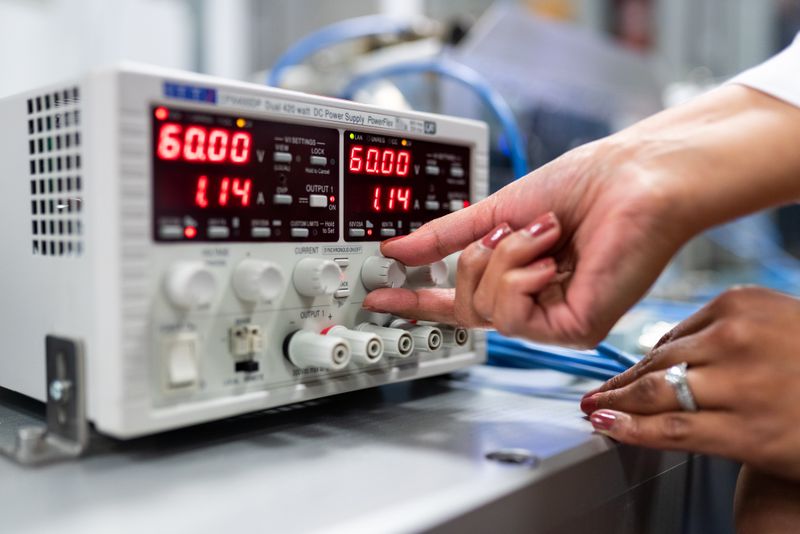
Materials or apparatus. What you used to collect your data: a survey instrument, a piece of lab equipment, a dataset, software you ran an analysis in. If you built or adapted something yourself, name and describe it here rather than assuming the reader knows what you mean.
Procedure. The step-by-step account of what actually happened, in the order it happened. This is usually the longest part of the section, and it should walk a reader through your study almost as if they were a participant in it.
Naming Your Variables Clearly
If your project involves an independent variable (what you changed), a dependent variable (what you measured), and any control variables (what you kept constant), name each one explicitly and use the same term for it every time it comes up later in your paper. A methods section that calls something "the treatment group" in one sentence and "the experimental condition" in the next makes a reader work harder than they should have to.
How Much Detail Is Enough? The Replication Test

The level of detail you need depends on how familiar your method already is. A well-established procedure, a standard statistical test, a widely used survey instrument, needs only a brief mention plus a citation to where it comes from. A procedure you designed yourself needs a full account: exact steps, in order, with enough specifics that someone unfamiliar with your project could follow along without asking you a single question.
The biomedical writing guidance above puts it plainly: include the details "if the study replication would fail without them." That's the actual test, not a word count or a page target. A methods section that's too short leaves out a step the researcher assumed was obvious. A methods section that's too long buries the real procedure under details that don't affect the outcome, like the brand of pen used to record data by hand.
This same discipline shows up across a full research paper. Your results section works the same way: report enough to support your claim, and not so much that the reader has to dig through raw data to find what matters.
Common Mistakes in a Methods Section
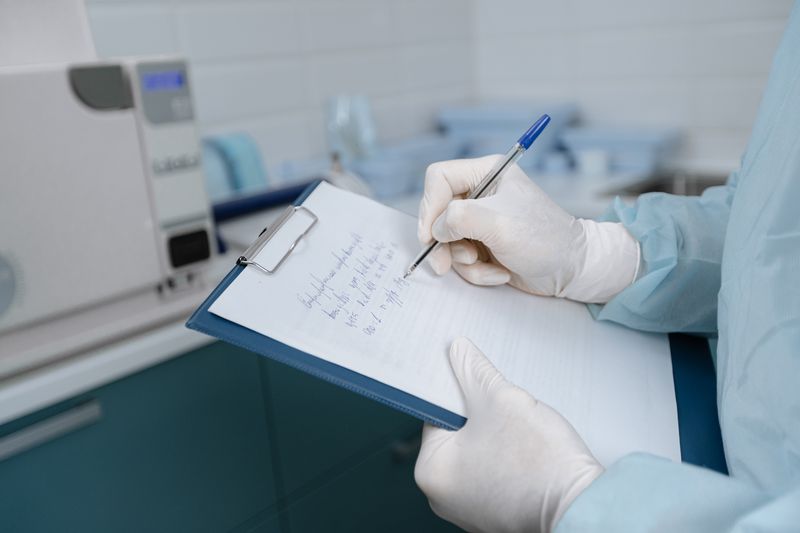
Leaving out a step because it felt obvious in the moment. The most common gap in a first methods section. If you skip a step because you did it automatically, a reader still needs it written down.
Reporting what happened instead of what you did. "Scores improved after the intervention" is a results sentence that wandered into methods. Methods describes the intervention itself, not its effect.
Missing methods that don't match the results you report later. If your results section references a measurement your methods section never described how you took, that's a real gap a careful reader, mentor, or judge will catch.
Weak description of who or what was studied. "Several students participated" tells a reader nothing useful. State the actual number, the relevant characteristics, and how participants were selected.
Overreliance on Passive Voice
Scientific writing leans on passive voice by habit, "the sample was collected," rather than "we collected the sample." Used occasionally, that's fine. Used throughout an entire methods section, it gets genuinely hard to tell who did what, especially in a project involving more than one collaborator. Default to active voice, and switch to passive only when the actor genuinely doesn't matter to the sentence.
How to Write Your Methods Section

- List every step of your actual procedure, in the order you did them, before writing full sentences. This becomes your outline.
- Describe your participants or subjects, including the count and any characteristics relevant to your results.
- Name your materials, equipment, or data sources specifically. If you built or adapted something, describe it here.
- Write your procedure as a chronological walkthrough, detailed enough that a reader unfamiliar with your project could follow it step by step.
- Name your variables explicitly and use identical wording for each one every time it appears again later in the paper.
- State how you analyzed your data, including any statistical tests or software used.
- Revise against what actually happened, not your original plan. If your real procedure deviated from what you intended, the methods section should describe the reality.
- Read it back and ask whether a stranger could repeat your study from this alone. If any step requires guessing, it isn't finished.
Frequently Asked Questions
What is the methods section of a research paper?
The section where you describe exactly what you did, in enough detail that another researcher could repeat your study. It comes after the introduction and before results, and it sticks to what you did, not what you found.
What are the required parts of a methods section?
Participants (who was involved), materials or apparatus (what you used to collect data), and procedure (the step-by-step account of what happened). A biomedical or lab-based project also needs a clear description of measurements and how the data was analyzed.
How much detail should a methods section include?
Enough that another researcher could repeat your study without contacting you for clarification. A familiar, well-known procedure needs only a brief mention with a citation. A procedure you designed yourself needs a full step-by-step account.
What's the difference between the methods and results sections?
Methods describes what you did. Results reports what happened once you did it. A sentence about what you measured belongs in methods; a sentence about what the measurement showed belongs in results.
Should I write the methods section before or after running my study?
You can draft it before data collection, since it describes your plan, but always revise it afterward to match what you actually did. A methods section that describes the plan instead of the reality misleads anyone trying to replicate it.
Can I use passive voice in a methods section?
Sparingly. Scientific writing has traditionally leaned on passive voice, but overusing it makes it unclear who did what. Active voice, "we measured temperature every 10 minutes," is usually clearer than "temperature was measured every 10 minutes."
Do I need to explain why I chose my methods?
Briefly, if the choice isn't obvious. A short justification for an unusual method helps a reader trust your results, but a full defense belongs in your discussion section, not here.
What's the most common mistake in a first methods section?
Leaving out a step you did without realizing it needed stating, usually something the student found obvious in the moment. If a reader would have to guess how you got from one step to the next, the section isn't finished yet.
The Bottom Line
A methods section does one job: let someone else repeat what you did without having to ask you a single question. That's a stricter standard than it sounds, since the steps that feel obvious to you while you're running your study are exactly the ones most likely to go missing on the page. Getting this right matters beyond the grade or the competition score. It's the part of a research paper that proves the work was actually yours to do, step by step, not summarized after the fact.
If you want a mentor checking your methods section for exactly these gaps before you submit, the Aspire Research Fellowship pairs you with a PhD mentor and a recent ISEF champion over 12 weeks, open to grades 8 through 11, with more than 20,000 students through the program so far.
Apply to the Aspire Research Fellowship →
For the section that comes right after this one, see our guide to writing the results section of a research paper, or jump ahead to how to write a discussion section once your findings are in.