A high school academic research competition is one of the few things in a college application that admissions officers can actually evaluate — not just check off. It's verifiable. It has judges. Your name is on the project. This guide explains which competitions exist, how each one works, what judges are looking for, and how to prepare a project that has a real shot at advancing.

What Counts as a High School Academic Research Competition?
Not all science competitions are the same. There's a spectrum — from team robotics challenges and quiz bowls to individual, original research evaluated by working scientists. This guide focuses on the latter: competitions where you design and execute an original study, present your findings, and have your work judged against real research standards.
The reason these competitions matter for college is that they function as external validation. A teacher can give you an A. A science fair judge — typically a professor or industry scientist with no stake in your GPA — evaluates whether your work is actually rigorous. That's a different signal.
Here are the major competitions in this space:
| Competition | Level | Who's Eligible | Fields | What You Submit |
|---|---|---|---|---|
| Regeneron ISEF | International | Grades 9–12 via regional fair | All STEM | Full research project |
| Regeneron Science Talent Search (STS) | National (US) | US high school seniors only | STEM + social science | Written report + application |
| Junior Science & Humanities Symposium (JSHS) | Regional/National | Grades 9–12 | STEM | Oral presentation + paper |
| Davidson Fellows | National | Under 18 | STEM, humanities, music | Portfolio submission |
| State/Regional Science Fairs | Regional | Grades 9–12 (varies) | All fields | Research project + display |
Each of these serves a different purpose. ISEF is the international summit; STS is the most selective US pipeline; regional fairs are the entry point. Entering the right one at the right level is the first strategic choice you'll make.
The Major High School Research Competitions, Explained
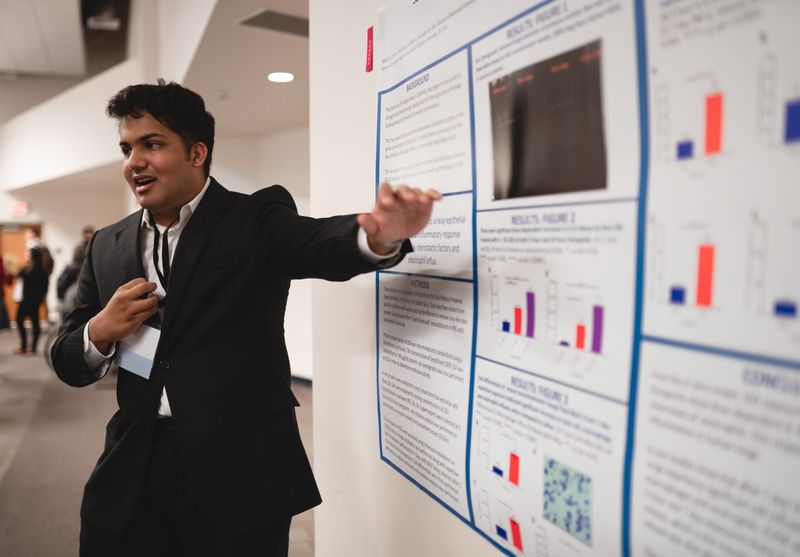
Regeneron ISEF
The International Science and Engineering Fair is the world's largest pre-college science competition. Roughly 1,800 projects from 80+ countries compete each year, judged by scientists and engineers in 21 subject categories. Top prizes include a $75,000 Grand Award and special awards from organizations like NASA, NOAA, and the Department of Defense.
You don't apply directly to ISEF — you qualify through a regional or state affiliate fair. If your regional project advances, you're sent to the national competition (typically held in May). That means ISEF is a two-stage path: win your regional fair first, then compete internationally.
Regeneron Science Talent Search (STS)
STS is US-only and open to high school seniors. It's considered the most prestigious pre-college research competition in the country — the Society for Science runs it, and alumni include Nobel laureates and National Medal of Science recipients. About 1,800 students enter. 300 are named Scholars. 40 advance to the finals in Washington, DC. The top prize is $250,000.
STS requires a full written research report, not just a display board. The research must be primarily your own work, completed during high school. This is not a competition you can prepare for in a month — the strongest applicants have been working on their project for a year or more.
Junior Science and Humanities Symposium (JSHS)
JSHS is sponsored by the Department of Defense and runs regional competitions at universities across the US. Students present their research orally — 12 minutes plus Q&A. The top presenter from each regional competition advances to the national symposium, where cash scholarships are awarded. It's less well-known than ISEF but highly regarded and specifically focused on oral scientific communication, which is a valuable skill to develop.
Davidson Fellows
The Davidson Fellowship awards $10,000, $25,000, or $50,000 scholarships to students under 18 who have completed a significant piece of work in STEM, literature, music, or philosophy. Unlike most competitions, it's not a science fair format — you submit a portfolio of your work and supporting documentation. It accepts a very small number of awardees each year, and the bar is high: the work should be at or approaching a publishable or professional level.
Regional and State Science Fairs
These are your entry point. If you want to compete at ISEF, you almost certainly need to qualify through a regional fair first. Regional fairs also have their own prizes, and placing at your regional level is a genuine credential — it means your project was evaluated and recognized by external judges in your area.
What Judges Actually Look For
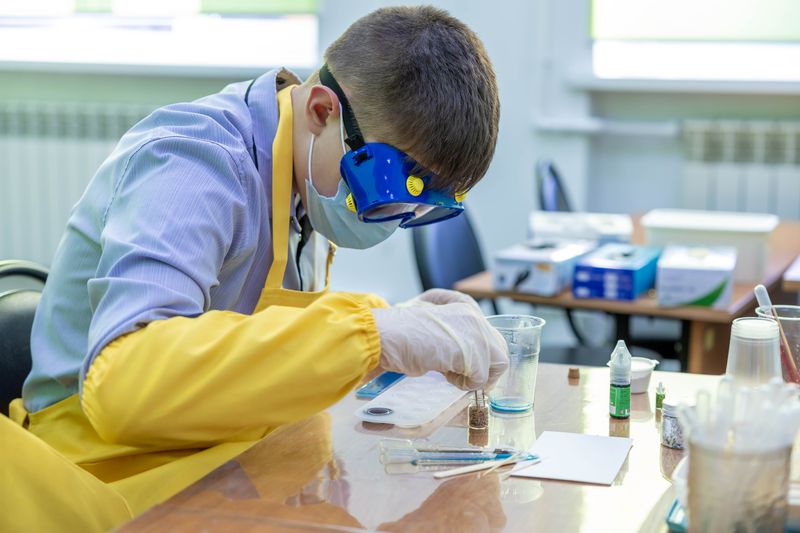
Most students prepare for research competitions the wrong way. They spend most of their time on the poster or the display, and not enough on being able to answer questions about their own work.
Judges at ISEF and similar competitions are scientists. They'll ask you why you made the choices you did. Why that methodology? Why that sample size? What confounds did you control for, and which ones didn't you? What would you do differently now? What does your result actually mean in the context of existing research?
A student who can answer those questions — even imperfectly, even with "I don't know yet, but here's what I think" — is demonstrating scientific thinking. That's what gets recognized.
What judges are NOT impressed by: - A polished presentation that the student clearly didn't design themselves - Overclaiming ("my research proves X" when the data only suggests X) - Borrowing conclusions from the literature without testing them - A research question so broad it could have filled a dissertation
The clearest indicator of a strong project is a student who understands the limitations of their own work. Acknowledging that your study was limited by sample size, or that your methodology had a flaw you noticed partway through, shows maturity. Judges expect imperfect research from high schoolers — they do not expect students to pretend it's perfect.
How to Prepare a Competition-Ready Research Project

Starting Early Is the Only Real Advantage
Students who place at ISEF typically started their projects 12–18 months before the competition date. That's not because the research takes that long — it's because iteration takes that long. Your first research question will probably be too broad. Your first methodology might have a flaw you discover three weeks in. Starting early gives you time to fix things before the submission deadline.
A student who starts in 9th or 10th grade can potentially compete in the same competition three times before graduating — with a stronger project each cycle. That compounding is one of the clearest structural advantages in research competition.
Picking the Right Question
The single most important decision is your research question. It needs to be:
- Answerable — with the time and resources you actually have
- Original — not just replicating a known study without adding anything
- Specific — "How does X variable affect Y outcome in Z population?" not "What is the relationship between technology and learning?"
- Connected to existing research — you should be able to cite 3–5 papers that lead up to your question and explain the gap you're filling
Your first version of the question will probably be too broad. Narrow it. Then narrow it again. That's not weakness — that's how scientific questions actually get formed.
Building the Project
Once your question is set, you need a methodology you can defend: how you'll collect data, what you're measuring, what variables you're controlling, how many subjects or samples, and what analysis you'll run on the results. Write this down before you start collecting data. If your methodology changes midway through, document why.
Keep a research log. Every experiment, every result, every decision you made and why. Judges ask about process, not just outcomes. Students who can walk a judge through the evolution of their thinking — including the wrong turns — tend to do better than students who can only present the final product.
The Display and the Presentation
The display board communicates your project visually. Keep it clean, structured, and scannable. Judges spend about 10–15 minutes with each project and are evaluating dozens of them. Make the research question visible from five feet away.
The oral presentation matters as much as the written component. Practice answering questions you don't expect, not just the ones you do. Ask a teacher, mentor, or parent to play judge and push you on your methodology choices. The student who gets flustered when challenged has a worse outcome than the student who says "That's a good point — I accounted for it by doing X, though I recognize there's still a limitation there."
How the Aspire Fellowship Prepares Students for Research Competitions

The gap between "I did some research" and "I have a competition-ready project" is real, and most high school students don't bridge it on their own. The structure matters. The accountability matters. Having someone who has done this at a high level guide you matters.
The Aspire Research Fellowship was built specifically around this. Every student is matched with two mentors: a PhD-level expert in their specific research field, and a recent ISEF champion — someone who placed 1st, 2nd, or 3rd at international ISEF within the past one to two years.
That second layer is what makes Aspire different. A PhD knows science. They don't always know what ISEF judges are looking for right now, how to structure a poster for maximum impact, or what questions the current cohort of judges tends to ask. An ISEF champion who competed two years ago does know those things. That's exactly the kind of mentorship that compounds into real competition outcomes.
The fellowship is 12 weeks, 1:1, and ends in a real deliverable — a research paper or poster that the student owns and can submit to competitions. More than 20,000 students have come through the program. Acceptance is roughly 10%, so students who get in are already demonstrating the kind of commitment that competition preparation requires.
Students in grades 8–11 are eligible. Starting in 8th or 9th grade gives you the most time to iterate — and iteration is the only real path to a competitive project.
"Aspire will help you grow and give you opportunities which you wouldn't even dream of." — Anonymous, Grade 9, Spring Cohort
Apply to the Aspire Research Fellowship →
Also see: our guide to research opportunities for high school students and tips on cold emailing professors for research mentorship.
Frequently Asked Questions
What is the most prestigious high school research competition?
Regeneron ISEF is the world's largest pre-college science competition, with roughly 1,800 projects from 80+ countries. For US-only students, Regeneron Science Talent Search (STS) is considered the most prestigious — open only to seniors, with up to $250,000 awarded to the top finisher.
How do you qualify for Regeneron ISEF?
Most students qualify through a regional or state affiliate science fair. You enter your regional competition, and if your project advances, you're selected to compete at ISEF. Visit the Society for Science website to find the affiliated fair nearest you.
Do you need a lab to enter a high school research competition?
No. A significant number of ISEF 2025 projects were completed without wet lab access. Computational research, data analysis, surveys, and social science projects have all won major awards. The quality of your research question and methodology matters more than equipment.
What should a high school research competition project include?
A strong project includes a clear original research question, a methodology precise enough to replicate, your data or results, analysis connecting findings to existing research, and a conclusion that doesn't overclaim. Judges also evaluate your depth of understanding during the oral presentation.
When should I start preparing for a high school research competition?
For ISEF, regional fairs typically happen in fall or winter, with ISEF in May. Starting your project in 9th or 10th grade gives you the most runway for iteration. Students who start in 11th or 12th grade can still compete, but have less time to revise.
Can 9th graders enter high school research competitions?
Yes. Most competitions accept grades 9–12. Starting in 9th grade is an advantage — you can compete multiple years, improve your project each cycle, and build a research record before senior year.
What do judges look for in high school research competitions?
Judges care most about whether you understand your own work. They'll ask why you made specific methodology choices, what your study's limitations are, and what you'd do differently. A student who can answer those questions honestly outperforms a student with a polished poster they can't explain.
How does winning a research competition help with college applications?
Placing at ISEF or qualifying for STS is a verifiable achievement that admissions officers recognize. It signals that you completed original research rigorous enough to survive external evaluation — something most applicants cannot demonstrate.
The Bottom Line
A high school academic research competition is the clearest external credential available to a high school researcher. You can't fake a placement at ISEF. You can't explain away a weak presentation to a scientist who asks you about your methodology. That's exactly what makes it valuable — and exactly why preparing for one is worth the time it takes.
Start with the right question. Build the methodology before you collect data. Iterate. Get a mentor who knows the current competition landscape, not just the science. And start earlier than you think you need to.
Apply to the Aspire Research Fellowship →
Want to see everything available for high school researchers? Read our full guide to research opportunities for high school students.