ISEF finalist meaning gets confused constantly, and it matters more than it sounds like it should, because "finalist" and "winner" are not the same thing at ISEF, and mixing them up on a resume or college application is the kind of small error that undermines an otherwise strong project. This guide breaks down exactly what ISEF finalist status means, how it differs from qualifying and winning, how many students reach it each year, and what it actually takes to get there.

What Is an ISEF Finalist?
An ISEF finalist is a student whose project has advanced to the Regeneron International Science and Engineering Fair, the largest pre-college science competition in the world. Finalist status means the project was selected as a top entry at a local or regional affiliated fair. It says nothing about how the project performed once it got to ISEF.
That distinction trips people up. A regeneron isef finalist has already cleared a serious bar just by qualifying, since only a small fraction of projects entered at affiliated fairs advance. But finalist status is the starting line at ISEF, not the finish line.
| ISEF Status | What It Means | How You Get There |
|---|---|---|
| Affiliate participant | Competed at a local or regional science fair | Enter a project at an ISEF-affiliated fair |
| ISEF finalist | Project selected to compete at the international fair | Win a top slot at your affiliated fair |
| Category winner / Special Award recipient | Placed within ISEF judging in a specific category or sponsor award | Compete and place at ISEF as a finalist |
| Best of Category / Grand Award winner | Top prize in one of ISEF's broad scientific categories | Win the highest recognition within a category at ISEF |
ISEF Finalist vs. Other ISEF Statuses

People often ask about the difference between an isef finalist vs isef qualifier. In practice, these two terms describe the same thing: a student whose project has been selected to advance to the international competition. Society for Science, which runs ISEF, uses "finalist" as the official term.
The confusion usually isn't finalist versus qualifier. It's finalist versus winner. Here's the actual hierarchy, in order:
- Affiliate fair participant: you entered a project at your local or regional fair
- ISEF finalist: your project was selected to represent your affiliate fair at ISEF
- ISEF award recipient: your project placed within judging at ISEF and received a category award or Special Award
- Best of Category / Grand Award winner: your project won the top prize in one of ISEF's broad categories
A student can accurately say "ISEF finalist" on an application the moment they qualify. Saying "ISEF winner" or "ISEF award recipient" without actually placing in judging is a factual error that a careful admissions reader, or a careful judge the following year, will notice.
How Many Students Become ISEF Finalists Each Year?
Roughly 1,600 to 1,800 students from more than 75 countries compete as ISEF finalists each year. They're selected from an estimated 7 to 9 million students worldwide who take part in local and regional science fairs annually. That funnel, from millions of entrants down to fewer than 2,000 finalist slots, is what makes finalist status meaningful even before any judging happens at ISEF itself.
Only a fraction of finalists go on to win a category award or Special Award. The exact percentage varies by year and category, but the takeaway is consistent: finalist status is already selective. It doesn't need to be inflated into "winner" to sound impressive.
How to Become an ISEF Finalist

Becoming an ISEF finalist starts at your affiliated fair, not at ISEF itself. Here's the actual path:
- Find your region's ISEF-affiliated fair. Every finalist qualifies through one of hundreds of local, regional, and state-level affiliated fairs, not by applying to ISEF directly.
- Develop an original research question. This is where most students stall. A significant number of ISEF projects in 2025 were completed without any lab access, so the barrier isn't equipment. It's forming a specific, testable question.
- Design and run your project. Collect data, iterate, and document your process. Judges at every level are evaluating rigor and originality, not just results.
- Compete at your affiliated fair. Each fair has a limited number of ISEF slots, allocated based on the fair's size and history.
- Advance as a finalist if selected. Your affiliated fair nominates its top projects, and those students become that year's ISEF finalists.
Your first research question will probably be too broad. So will your second one. That's normal, and it's exactly the stage where working with a mentor who's judged or competed recently, rather than a decade ago, makes the difference between a project that qualifies and one that doesn't.
ISEF Award Categories and Finalist Recognition

Once a student reaches finalist status, their project is judged at ISEF within one of roughly 20 broad scientific categories, from Animal Sciences to Computational Biology and Bioinformatics. Recognition at ISEF happens in a few distinct tiers:
- Category awards: first through fourth place within a specific scientific category
- Special Awards: sponsored by outside organizations and universities, often tied to a specific theme or application of research
- Best of Category / Grand Awards: the top honor within one of ISEF's broad categories, among the most competitive recognitions at the fair
A student can be a finalist without winning any of these, and that's still a legitimate, competitive achievement. The finalist label describes qualification. These award tiers describe performance once there.
Does Being an ISEF Finalist Help College Admissions?
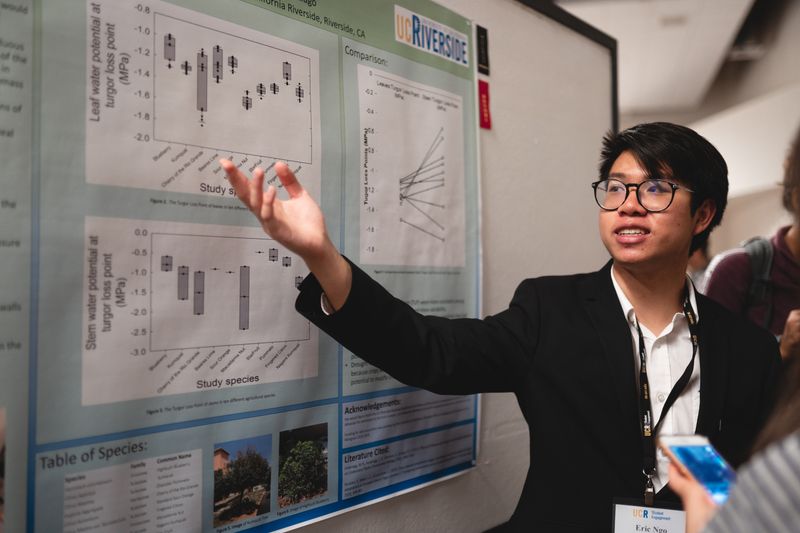
Yes, but not for the reason most students assume.
What Admissions Officers Actually Look For
Admissions officers don't just read the word "finalist" and move on. What they're evaluating is the research artifact behind it: a project with the student's name on it, a methodology they can explain, and results they can defend under questioning. A student who can talk fluently about what they found, how, and what they'd do differently shows something no extracurricular checklist shows on its own.
Original research signals intellectual maturity in a way test scores and club memberships cannot, but only if the student actually owns the work behind the title. "ISEF finalist" without a project the student can speak to in depth is a line on a resume. "ISEF finalist" with a defensible, original project is a credential.
Common Mistakes Students Make Chasing Finalist Status
The biggest mistakes happen before a student ever reaches an affiliated fair, not during judging.
Believing You Need Lab Access
Students who assume they need a university lab often wait years to start, and that wait is unnecessary. Computational, social science, humanities, and data-driven projects are equally legitimate at ISEF, and a significant number of 2025 ISEF projects were done entirely from home.
Choosing an Expensive, Unfocused Program
Most $5,000 to $10,000 research programs run around 10 weeks, are cohort-based, and match students with a mentor only after they've already paid, with no say in the pairing. Generic advice gets generic results. A student chasing finalist status needs mentorship specific to what's currently winning at ISEF, not general encouragement to "do research."
If you're still deciding where to compete, our guide to high school academic research competitions compares ISEF against Regeneron Science Talent Search, JSHS, and other major options.
Frequently Asked Questions
What does ISEF finalist mean?
An ISEF finalist is a student whose project has advanced all the way to the Regeneron International Science and Engineering Fair, the largest pre-college science competition in the world. Reaching finalist status means the project was selected as one of the top entries at a local or regional affiliated fair, not that the student has won an award at ISEF itself.
Is ISEF finalist the same as ISEF winner?
No. Finalist status means the project qualified to compete at ISEF. Winning means the project also placed in judging at ISEF and received a category award, Special Award, or Best of Category recognition. Every ISEF award winner is a finalist, but most finalists don't win an award.
How many ISEF finalists are there each year?
Roughly 1,600 to 1,800 students from more than 75 countries compete as ISEF finalists each year, selected from an estimated 7 to 9 million students who take part in local and regional science fairs worldwide.
How do you become an ISEF finalist?
You compete at and win a top placement in an ISEF-affiliated local or regional fair, which then nominates a limited number of projects to advance to the international competition. Each affiliated fair has its own slot allocation, so the path starts with finding your region's affiliated fair, not with ISEF directly.
Does being an ISEF finalist help with college admissions?
Yes, but the finalist status alone is not what impresses admissions officers. What matters is the concrete research artifact behind it: a project the student can discuss in detail, defend under questioning, and point to as evidence of independent work.
Can you become an ISEF finalist without lab access?
Yes. A significant number of ISEF projects in 2025 were completed without any lab access, particularly in computational, social science, and data-driven categories. Lab access is not a requirement for a competitive project.
What's the difference between an ISEF finalist and an ISEF qualifier?
In practice, these terms are used interchangeably. Both describe a student whose project has been selected to advance to the international ISEF competition. The distinct terms worth knowing are finalist (qualified to compete), category winner or Special Award recipient (placed within judging), and Best of Category or Grand Award winner (top prize in a category).
The Bottom Line
ISEF finalist meaning comes down to one clear line: finalist means you qualified to compete at the international fair, not that you won an award once you got there. Both are real achievements, and mixing up the terms undersells the first and overstates the second. Getting there takes an original question, real project design, and a fair amount of persistence through a broad-then-narrow research process that trips up almost everyone at first.
If you're working toward finalist status and want a mentor who knows what's winning at ISEF this year, not a decade ago, the Aspire Research Fellowship pairs you with a PhD-level mentor and a recent ISEF champion over 12 weeks. Over 20,000 students have gone through the program, with an acceptance rate of roughly 10%, open to grades 8 through 11.
Apply to the Aspire Research Fellowship →
For more on getting your project ready to compete, see our guides to how to start a research project in high school and the ISEF quad chart requirement.