Most students treat a Science Olympiad practice test like any other worksheet: find one online, fill it out, check the key, move on. That's why so many teams practice hard and still get surprised on tournament day. The test they practiced on covered last season's topic, or they never timed themselves, or they never went back to fix what they got wrong. This guide shows you where to find real practice tests that match your event and how to use them so the work actually shows up in your score.

Where to Find Science Olympiad Practice Tests
A Science Olympiad practice test is any past exam from a real tournament: invitationals, regionals, states, or nationals. Written by event supervisors, these tests show you the question style, difficulty, and pacing you'll face.
You have three main sources, plus one most students forget:
| Source | What You Get | Cost | Best For |
|---|---|---|---|
| soinc.org event pages | Invitational tests sorted by current and past topics | Free | Matching this season's topic |
| Science Olympiad Store National Test Packets | Tests, answer keys, and results from the National Tournament | Paid | Seeing the hardest level of the event |
| scioly.org Test Exchange | Thousands of community-shared tests and keys | Free | Volume and variety |
| Your own team's archive | Tests older members kept from past tournaments | Free | Your region's style |
The official event pages on soinc.org are the best place to start. Each event has a page listing practice tests from university invitationals. The Anatomy and Physiology event page, for example, links tests from the Columbia, Michigan, MIT, and UT Austin invitationals, split into current topics and previous topics.
National Test Packets come from the Science Olympiad Store. They contain the real tests, keys, and results from the National Tournament. One naming quirk: packets are labeled for the season they're sold in, so the 2026 packets hold tests from the 2025 National Tournament at the University of Nebraska.
Scioly.org is a community site run by and for competitors. Its Test Exchange Archive is the largest public collection of past Science Olympiad tests and keys online, covering almost every event the competition has ever run.
Why Old Science Olympiad Tests Can Mislead You

Here's the mistake that costs teams the most points. Many study events change their focus every season, and old tests don't know that.
Anatomy and Physiology is the clearest example. The current topics listed on its event page are the respiratory, digestive, and immune systems. Recent past seasons covered the skeletal and muscular systems, and before that, the cardiovascular and lymphatic systems. A test from two years ago can spend 50 minutes quizzing you on systems that won't appear at your tournament.
Events also leave the lineup entirely. Machines, for example, ran in 2026 but isn't on the 2027 Division B or Division C event list. Before you print anything, open the current rules manual and write down three things:
- This season's topics for your event
- What you're allowed to bring (some events allow a full binder, others a single sheet of notes)
- Whether the event has a hands-on, lab, or device portion in addition to the written test
Then filter every practice test against that list. If a test covers last year's topic, use it only for the sections that still apply.
National Test Packets vs. Free Invitational Tests
You don't need to buy anything to practice well. But the two sources do different jobs.
Invitational tests are written by volunteer supervisors at each host tournament, and quality varies. Some are excellent. Some have answer keys with mistakes. Their big advantage is volume and freshness, since many are from this season and cover current topics.
National Test Packets are the most polished tests you'll find. They're written for the strongest teams in the country, so they show you where the ceiling is. The downside is that they're always a season behind on topic.
Which Invitational Tests Are Worth Your Time
Start with tests from the large university-run invitationals, the ones linked directly on soinc.org event pages. Those tournaments draw strong teams, so the supervisors write harder, cleaner tests. Save smaller invitationals for when you've worked through the big ones.
If a key looks wrong, don't assume you're wrong. Check the answer against your notes and a textbook. Catching a bad key is good practice too.
How to Take a Science Olympiad Practice Test the Right Way
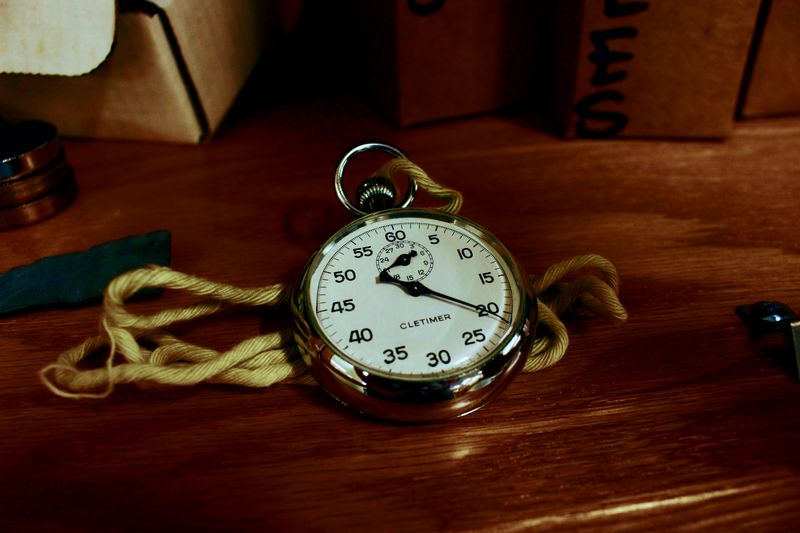
Taking a test casually, with your phone out and no timer, teaches you the content. It doesn't teach you the event. Here's how to make practice match the real thing:
- Set a 50-minute timer. Most tournaments run events in 50-minute blocks. If your event splits time between a written test and a hands-on portion, cut your written time to match.
- Work with your actual partner. Most events are done in pairs. Practicing alone hides the biggest real-world problem: two people deciding who answers what.
- Use only what the rules allow. If you're allowed one sheet of notes at the tournament, practice with one sheet. Not your whole binder.
- Split the test before you start. Agree on who takes which sections in the first minute, then swap and check at the end.
- Mark your guesses. Put a small symbol next to any answer you weren't sure about, even if it turns out right. Lucky guesses still show you a gap.
- Stop when time runs out. Don't give yourself "just two more minutes." Tournament supervisors won't.
Your first timed practice test will probably feel rushed and a little humbling. So will your third one. That's the point of practicing before it counts.
Review Your Practice Test, Then Fix Your Notes
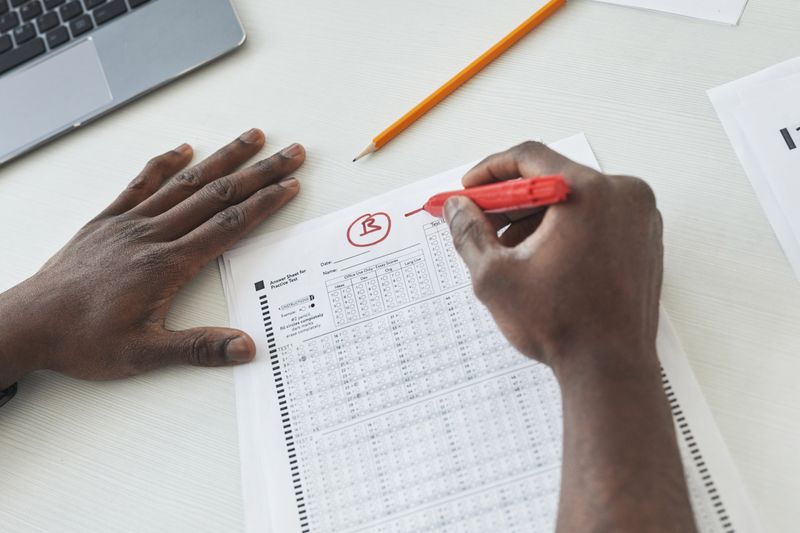
Grading takes ten minutes. Reviewing is where your score actually goes up, and it's the step most teams skip.
For every question you missed or guessed on, write down which of these went wrong:
- Didn't know it. The content wasn't in your head or your notes. Add it to your notes.
- Couldn't find it. The answer was in your binder, but you couldn't locate it fast enough. Reorganize or add tabs.
- Misread it. You knew the content but missed a word like "not" or "except." Slow down on question stems.
- Ran out of time. You never reached the question. Practice the sections you're slowest on.
After a few tests, patterns show up. If half your misses are "couldn't find it," the fix isn't more studying. It's a better binder.
Practice Tests for Build and Lab Events
Build events like Boomilever or Hovercraft, and lab events like Chemistry Lab, aren't just written tests. Many include a written portion, and you're expected to answer questions about how your device works. Practice tests help with that part.
They can't replace the rest. A device that's never been tested under event conditions will fail in ways no written test predicts. Split your prep: written practice tests for the knowledge portion, timed device runs for the build portion.
Events like Experimental Design are their own case. You can't predict the experiment, so practice tests there are about rehearsing a process, not memorizing content. Our guide to Disease Detectives covers how released tests work for a case-study event.
What Science Olympiad Practice Tests Can't Teach You
Practice tests make you better at answering other people's questions. Research is the opposite skill: asking your own question and finding the answer when no key exists.
Plenty of Science Olympiad students are closer to doing real research than they think. If you can design a controlled experiment under time pressure, you can run a research project. And you don't need a university lab to do it. A significant number of ISEF projects in 2025 were completed without any lab access, using data, computation, or field work students set up themselves.
That's the jump the Aspire Research Fellowship is built for. Students in grades 8–11 work one-on-one with a mentor for 12 weeks and finish a project with their own name on it. Aspire has reached more than 20,000 students, and the acceptance rate is about 10%. If you're curious what that first step looks like, our guide on how to start a research project in high school walks through it.
Frequently Asked Questions
Where can I find Science Olympiad practice tests?
Start with the official event pages on soinc.org, which link to free tests from invitational tournaments. The Science Olympiad Store sells National Test Packets with tests, answer keys, and results from the national tournament. Scioly.org, a community site, runs a Test Exchange with thousands of past tests and keys.
Are Science Olympiad practice tests free?
Many are. The invitational tests linked on soinc.org event pages and the tests on scioly.org's Test Exchange are free. The official National Test Packets from the Science Olympiad Store cost money.
Can I use old Science Olympiad tests to practice?
Yes, but check the topic first. Many study events rotate their focus every season. Anatomy and Physiology, for example, covers different body systems from one year to the next, so a test from two seasons ago can quiz you on material that won't show up at your tournament.
What is a Science Olympiad National Test Packet?
A set of the actual tests, answer keys, and results from a Science Olympiad National Tournament, sold through the official Science Olympiad Store. Packets are labeled by the season they're sold for, so the 2026 packets contain tests from the 2025 National Tournament.
How long is a Science Olympiad test?
Most tournaments schedule events in 50-minute blocks, so practice with a 50-minute timer. Some events split that time between a written test and a hands-on or device portion, so check your event's rules manual for the exact format.
How many practice tests should I take before a Science Olympiad tournament?
Quality matters more than count. Five or six tests taken under real conditions and reviewed carefully will do more than twenty skimmed for answers. Aim for at least one timed test a week in the month before your tournament.
Do Science Olympiad practice tests help with build events?
Partly. Many build events include a written test or require you to answer questions about your device, so practice tests cover that portion. They can't replace testing your actual device under event conditions.
The Bottom Line
A Science Olympiad practice test only helps if it matches this season's topic, runs on a real timer, and gets reviewed afterward. Pull tests from soinc.org event pages and scioly.org first, add National Test Packets if your team wants the hardest benchmark, and fix your notes after every test. The work you're putting into prep is real training in scientific thinking, and it carries straight into research of your own.
Apply to the Aspire Research Fellowship →
New to the competition? Start with our overview: What Is Science Olympiad?