Science Olympiad gets treated as a single vague STEM club when it's actually a structured competition with two divisions, 23 events each, and its own real event names like Circuit Lab, Codebusters, and Boomilever that students search individually without knowing they're all part of one thing. This guide covers what the competition actually is, its five event categories, specific popular events, how tournaments work, and how to get your team started.

What Is Science Olympiad?
Science Olympiad is a team-based STEM competition, not a single event or a general science club. Teams compete across two divisions based on grade level, each with 23 distinct events run on a single tournament day.
| Division | Grades | Events | Team Size |
|---|---|---|---|
| Division B | 6-9 (middle school) | 23 | Up to 15 |
| Division C | 9-12 (high school) | 23 | Up to 15 |
Science olympiad high school specifically means Division C, though some 9th graders overlap with Division B depending on their school's team structure. Events run in roughly six 50-minute blocks across a single Saturday tournament, with team members paired up across events rather than every student competing in all 23.
The Five Event Categories
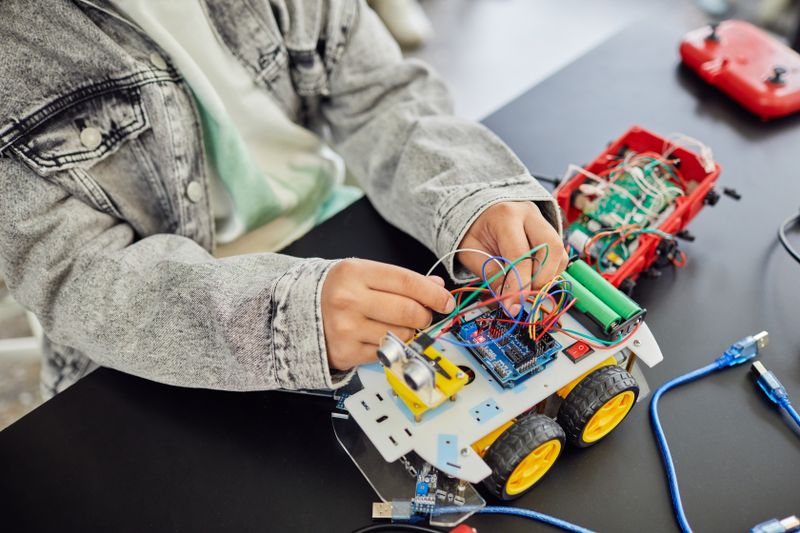
Science olympiad events explained by category, straight from the official rules structure: Life, Personal and Social Science covers events like Anatomy and Physiology and Disease Detectives. Earth and Space Science covers events like Dynamic Planet and Meteorology. Physical Science and Chemistry covers lab-based chemistry and physics events. Technology and Engineering covers build events like Circuit Lab and Boomilever. Inquiry and Nature of Science covers events built around experimental design and data analysis rather than a fixed content area.
Every one of the 23 events in a division falls under one of these five categories, which is worth knowing before picking which events to specialize in.
Popular Build and Engineering Events
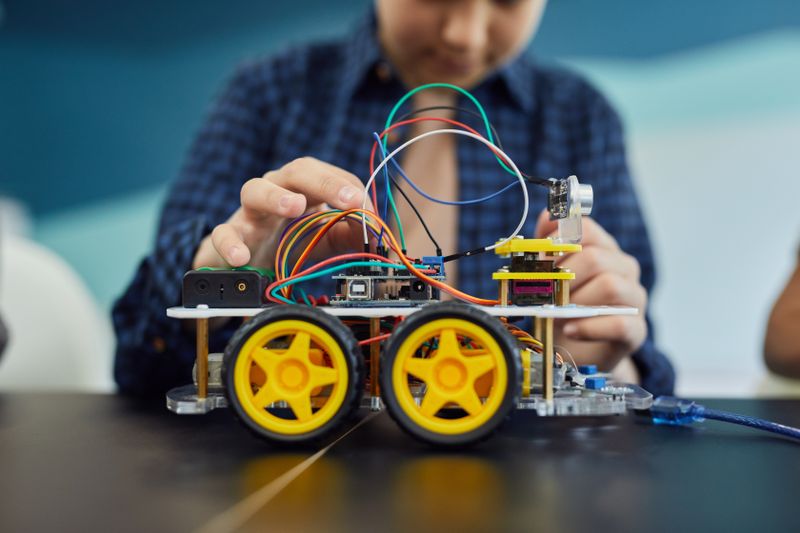
The Technology and Engineering category includes some of the most individually searched events in the entire competition. Circuit lab science olympiad combines a written exam on circuit analysis with a hands-on circuit-building task. Boomilever science olympiad and the related bridge-building events score a wooden structure on how much weight it holds relative to its own weight. Hovercraft science olympiad and helicopter science olympiad are flight-time and distance events built around a specific vehicle design. Scrambler science olympiad scores how precisely a mechanical device can stop at a target distance, and electric vehicle science olympiad scores a battery-powered vehicle's speed and control over a course.
If circuit-focused events are your actual interest beyond the competition itself, our guide to circuit design internships for high school students covers a related path outside Science Olympiad specifically.
Popular Study and Lab Events
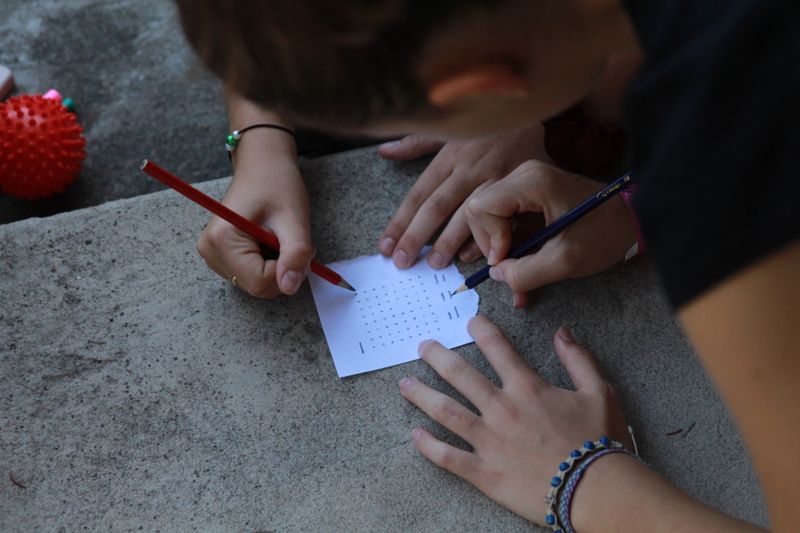
Anatomy and physiology science olympiad is a Life Science event testing detailed knowledge of a specific body system that rotates each season. Codebusters science olympiad has teams solving and decoding cryptography puzzles under a timed written format, scored on speed and accuracy. Designer genes science olympiad covers genetics and molecular biology concepts. Remote sensing science olympiad tests interpretation of satellite and aerial imagery data. Potions and poisons science olympiad and bungee drop science olympiad round out the event list with a chemistry-safety-focused event and a physics-based egg-drop-style challenge, respectively.
How Science Olympiad Tournaments Work

Science olympiad team size caps out at 15 students per team, with grade-level limits within that: no more than seven 12th graders on a Division C team, or five 9th graders on a Division B team. Competition runs through a tiered structure: Invitational tournaments first, then Regional, State, and National tournaments, with top-finishing teams advancing at each level.
Every team competing at any tournament level needs an active national membership, currently $75 and typically paid through state membership, according to the official Science Olympiad site.
How to Get Started with Science Olympiad
- Check if your school already has a team. Most schools with an active team run it through a science teacher or dedicated club advisor.
- If there's no team, find a faculty sponsor first. A team needs an adult sponsor before it can register with the state chapter.
- Pick 2-3 events to specialize in rather than spreading thin. Depth in a couple of events beats a surface-level attempt at many.
- Study released rules manuals for your specific events, since event rules and content areas can shift from season to season.
- Start with an Invitational tournament to get real competition experience before State-level pressure.
If you're weighing Science Olympiad against an individual research path instead of a team competition, our guide to how to start a research project in high school covers that separate route.
Common Mistakes Teams Make
Spreading one student across too many events. Depth in 2-3 events produces better results than a shallow attempt at 6 or 7.
Ignoring the current season's rules manual and relying on last year's content. Event rules and scoring specifics change season to season, and outdated prep costs real points.
Treating build events as a one-time project instead of iterating. The strongest Boomilever, Hovercraft, or Electric Vehicle entries usually go through several test-and-revise cycles before the tournament, not a single build attempt. For a broader look at other STEM competitions, our guide to high school academic research competitions covers alternatives with different formats.
Frequently Asked Questions
What is Science Olympiad?
Science Olympiad is a team-based STEM competition for middle and high school students, run through Division B (grades 6-9) and Division C (grades 9-12). Teams of up to 15 students compete across 23 events per division, spanning life science, earth science, physical science, engineering, and inquiry-based challenges.
What are the Science Olympiad event categories?
Five categories: Life, Personal and Social Science; Earth and Space Science; Physical Science and Chemistry; Technology and Engineering; and Inquiry and Nature of Science. Each event falls under one of these, whether it's a written test, a lab task, or a build event.
How many events are in Science Olympiad?
23 events in Division B and 23 in Division C each season, generally run across six 50-minute blocks on a single tournament day. Team members pair up to compete in specific events rather than every student doing every event.
What is Circuit Lab in Science Olympiad?
Circuit Lab is a Technology and Engineering event where students are tested on circuit analysis, both through a written exam and hands-on circuit-building tasks, covering topics like resistors, capacitors, and basic circuit theory.
What is Codebusters in Science Olympiad?
Codebusters is an event where teams solve and sometimes create cryptography puzzles, ranging from classical ciphers to more modern encoding methods, scored on speed and accuracy under a timed test format.
How big is a Science Olympiad team?
Up to 15 students per team, with grade-level caps: no more than seven 12th graders on a Division C team, or five 9th graders on a Division B team. Students pair up across the 23 events rather than one student doing everything.
What happens at a Science Olympiad tournament?
Teams compete at Invitational, Regional, State, and National tournament levels, roughly in that order, with the top teams at each level advancing. A national membership fee, currently $75, is required and typically paid as part of state membership.
How do you join a Science Olympiad team?
Most students join through their school's existing team via a science teacher or club advisor. If your school doesn't have one, starting a team usually means finding a faculty sponsor and registering through your state's Science Olympiad chapter.
The Bottom Line
Science Olympiad is a structured, tiered competition with real events like Circuit Lab and Codebusters that plenty of students search individually without realizing they belong to one organization. Picking a couple of events to go deep on, understanding the five category structure, and treating build events as an iterative process rather than a single attempt are what separate teams that advance from teams that don't.
If your interest points toward an individual research project you can own from question to result, rather than a team competition, the Aspire Research Fellowship pairs you with a PhD-level mentor and a recent ISEF champion over 12 weeks. Over 20,000 students have gone through the program, with an acceptance rate of roughly 10%, open to grades 8 through 11.
Apply to the Aspire Research Fellowship →
For other STEM competition formats worth considering, see our guide to high school academic research competitions.