Free research opportunities for high school students are real, but they come with tradeoffs most students don't hear about until they're already applying. Some free paths are highly competitive. Others require you to do all the legwork yourself. This guide breaks down exactly what's free, what it actually costs you in time and effort, and how to decide if free is the right path for your situation.

What Counts as a "Free" Research Opportunity
"Free" covers a wider range than most students expect, and the paths differ a lot in structure, competitiveness, and what you actually walk away with.
| Type | Cost | What You Get | Effort Required |
|---|---|---|---|
| Government-funded programs | Free | Structured placement, institutional credibility | High (competitive application) |
| University/nonprofit outreach | Free to low-cost | Faculty guidance, sometimes cohort-based | Medium to high |
| DIY self-directed research | Free | Full ownership of your project, direct mentor relationship | High (you build everything yourself) |
| Paid 1:1 mentorship | $2,500+ | Guaranteed matched mentor, defined curriculum | Low (structure is provided) |
The pattern across every free option: the money you save gets replaced by either a harder application process or more work you have to do yourself. That's not a criticism of free programs. It's just what "free" actually means here.
Government-Funded Research Programs
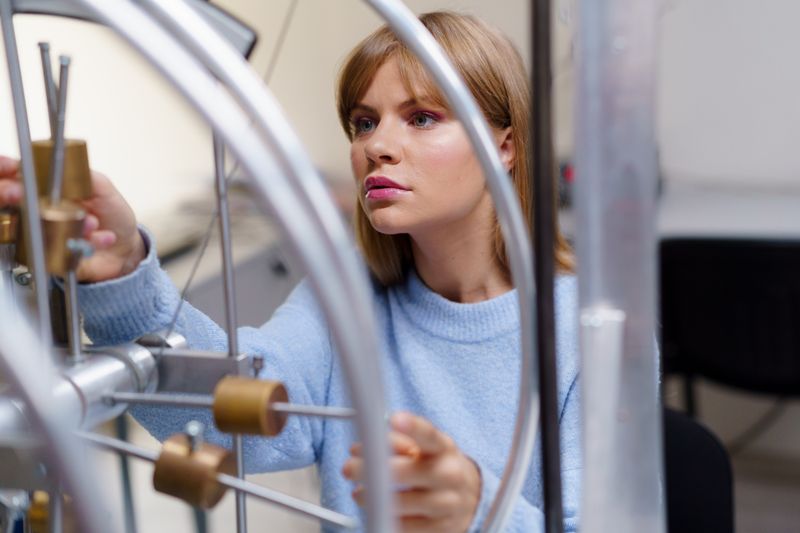
The NIH Office of Intramural Training and Education runs research internships specifically for high school students, placing them inside real federal labs alongside professional researchers. These programs are fully free and come with genuine institutional credibility.
The tradeoff: they're highly competitive. Free and prestigious means limited spots and a large applicant pool. You're also usually assisting on an existing research question rather than developing your own from scratch, which matters if your goal is a project you can call entirely your own.
The NSF funds similar research experiences, though most of its flagship programs like REU are built for undergraduates. It's still worth checking individual university pages for high-school-specific offshoots, since some exist under NSF-funded grants.
University and Nonprofit Free Programs

Some universities run outreach programs specifically designed to bring underrepresented or low-income students into research, often fully funded including travel and housing for residential programs. These are usually the most selective free option because they're solving for both academic merit and access, which narrows the applicant pool differently than a purely merit-based program.
Nonprofit organizations occasionally run similar initiatives, especially in STEM fields tied to specific causes (public health, environmental science, data equity). These are worth searching for directly, since they don't always show up in general "high school research program" searches.
DIY Free Research (Self-Directed)

This is the path with zero application gatekeeping and zero cost: you find a professor whose published work genuinely interests you, cold-email them directly, and try to build a mentorship relationship yourself.
Most students who email a professor never hear back. Most students also never email a professor. The ones who send fifteen emails and hear back from two are already ahead of almost everyone who considered this path and didn't try it.
What You Need Besides Money
You don't need money for this path, but you do need three things: a specific research interest (not "I like science," but a specific question inside a specific field), the patience to handle silence from most of the people you contact, and enough independence to structure your own project without someone checking in on you weekly. A significant number of ISEF 2025 projects were completed without any lab access, which means computational, data-driven, and literature-based DIY projects are entirely legitimate paths, not consolation prizes.
Free vs. Paid: What You're Actually Trading Off

Free options aren't lesser. They're a different trade. You save money and pay for it with either a harder application, less individual attention, or more self-direction than most 14-to-17-year-olds have practiced.
That said, $5,000 to $10,000 paid research programs charge too much and deliver too little. Most are cohort-based, run around 10 weeks, and match you with a mentor only after you've already paid, so you have no way to evaluate fit in advance. If you're going to pay for structure, the price should reflect what you're actually getting.
The Aspire Research Fellowship sits in a different spot: 12 weeks, fully 1:1, with a two-week matching process before you commit anything, at $2,997 (as low as $749 a month). That's less than half of what competitor programs charge for a shorter, less individualized structure. It's not free, but if you've tried the free paths and hit a wall (unanswered emails, a rejected government application, no local university program), it's built specifically to remove the two things that make free options hard: uncertainty about who your mentor will be, and the discipline required to structure a project entirely on your own.
Students in grades 8 through 11 are eligible, and the acceptance rate is roughly 10%, which is selective but far more attainable than most government programs.
Apply to the Aspire Research Fellowship →
How to Apply and Stand Out for Free Programs
Free programs are competitive precisely because they're free. Here's how to actually get in:
- Apply early and to multiple programs. Government and university programs often have hard deadlines months before the program starts. Don't wait until spring for a summer program.
- Have a specific interest, not a general one. "I like biology" doesn't stand out. "I've been reading about antibiotic resistance since 8th grade" does.
- Get a teacher or counselor recommendation that's specific to you. Generic recommendation letters are easy to spot. Ask for one that mentions an actual project, class discussion, or moment they remember.
- If you're doing DIY outreach, personalize every email. A cold email that references the professor's actual published work gets answered more often than a generic request for mentorship.
- Apply even if you think the odds are against you. A ~10% acceptance rate still means real students get in every cycle. You can't be one of them if you don't apply.
Frequently Asked Questions
Are there free research programs for high school students?
Yes. Government agencies like the NIH run free research internships, and some university outreach programs offer no-cost spots to high schoolers, though they're often more competitive than paid alternatives. DIY research, where you find your own mentor and build the relationship yourself, is also free and doesn't require acceptance into a formal program.
How can a high school student do research for free?
Three paths: apply to a government-run program like an NIH internship, apply to a university outreach program that waives tuition for high schoolers, or find a professor doing work you're interested in and cold-email them directly. The first two require competitive applications. The third requires initiative and patience but costs nothing beyond your time.
What is the catch with free research programs?
The tradeoff isn't hidden, it's structural. Free programs are usually more competitive, may place you on someone else's research question rather than your own, and don't always guarantee a mentor before you're accepted. Paid structured programs solve those problems by design, which is what you're actually paying for.
Can I do real research without any money at all?
Yes. A significant number of ISEF 2025 projects were completed without any lab access or paid mentorship. Computational research, public dataset analysis, and literature-based research all require only a computer and an internet connection. You can also cold-email professors to build a free mentorship relationship.
Do free research programs look as good on college applications as paid ones?
The program's price tag doesn't matter to admissions officers. What matters is the finished work: a research paper or poster you completed, understand deeply, and can speak to in an interview. A free program that ends in a real deliverable is worth more on an application than an expensive one that ends in a certificate.
What free research programs are the most competitive?
Government-run programs like NIH's high school internships tend to be the most competitive because they're free, prestigious, and limited in spots. Some university outreach programs are similarly selective. Free doesn't mean easy to get into. It usually means the opposite.
Is DIY research a legitimate path if I can't afford a program?
Yes. Finding a professor whose published work interests you and cold-emailing them directly is a completely legitimate way to start original research. It takes more patience than a structured program, since most emails go unanswered, but it costs nothing and can lead to a real mentorship relationship.
The Bottom Line
Free research opportunities for high school students are real, and for a motivated student with a specific interest and some patience, they can lead to the same outcome as a paid program: a finished piece of research with your name on it. The tradeoff is real too. Free paths ask for more from you, whether that's a competitive application, initiative to cold-email professors, or the discipline to structure a project without anyone checking in on you.
Try the free paths first if cost is the main barrier. If you hit walls with unanswered emails or long-shot applications, a structured program built around your budget and your timeline is still on the table.
Apply to the Aspire Research Fellowship →
For more on building your own project from scratch, see our guide to research programs for high school students and research opportunities for high school students broadly.