Rocks and minerals science olympiad looks easy from the outside. It's a table of rocks. Then the timer starts, you're holding a gray specimen that could be four different things, and your partner is flipping through a 200-page binder that has no tabs. This guide covers what the event tests, how to identify specimens quickly, and how to build a study plan and binder that hold up under the clock.
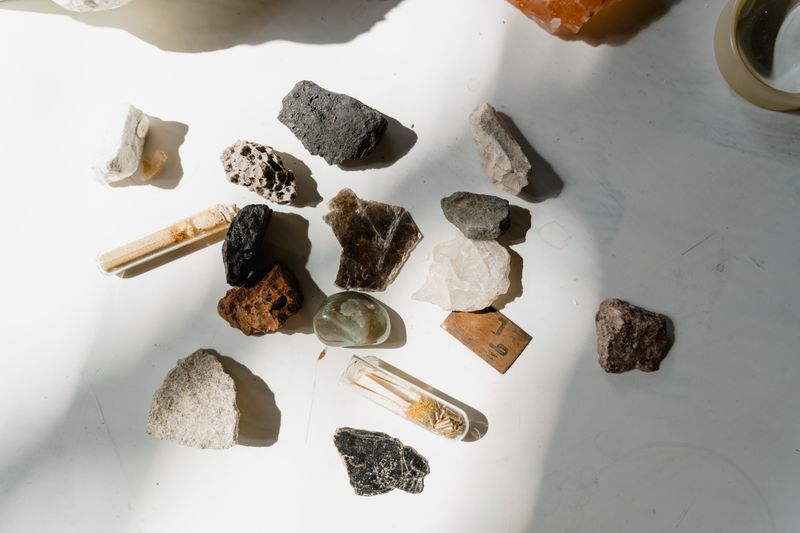
What Is Rocks and Minerals Science Olympiad?
According to Science Olympiad's official event page, teams "will identify and classify rocks and minerals and demonstrate knowledge of how rocks and minerals help to understand geologic processes, interpretation of Earth's history, the development of natural resources, and use by society."
That sentence has two halves, and you're scored on both. The first half is specimen identification. The second half is everything else: the rock cycle, how ores form, why a geologist can read a cliff face like a timeline.
Rocks and Minerals is on the 2027 slate for both Division B (middle school) and Division C (high school). The specimens come from an official national list, so you know exactly what can show up. That's rare in Science Olympiad and it's your biggest advantage.
Here's how the event usually breaks down:
| Part of the Event | What You Do | What It Rewards |
|---|---|---|
| Specimen stations | Identify numbered rocks and minerals at timed stations | Hands-on practice with real samples |
| Station questions | Answer questions about the specimen in front of you | Knowing properties, uses, and formation |
| Written questions | Rock cycle, Earth history, ore deposits, economic uses | Reading past tests and textbook study |
| Binder | Look up what you don't remember | Organization, not page count |
If you're new to how Science Olympiad events work overall, start with our guide on what Science Olympiad is.
Mineral Identification: The Properties That Actually Matter
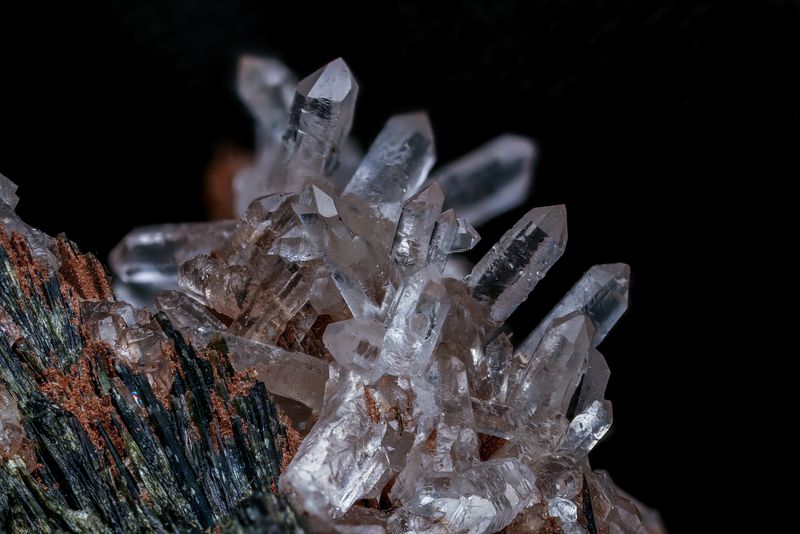
Most beginners identify minerals by color. That's the fastest way to get one wrong. Quartz alone shows up clear, white, pink, purple, and smoky brown.
Experienced competitors go through a short list of properties instead:
| Property | What It Means | Quick Test or Example |
|---|---|---|
| Hardness | Resistance to scratching, on the Mohs scale of 1 to 10 | Fingernail is about 2.5, glass about 5.5 |
| Streak | Color of the mineral's powder | Hematite can look silver-black but streaks reddish-brown |
| Luster | How the surface reflects light | Metallic (galena) vs. glassy (quartz) vs. dull |
| Cleavage / fracture | Whether it breaks along flat planes | Mica peels into sheets, quartz fractures in curves |
| Crystal habit | The shape crystals grow in | Pyrite often forms cubes |
| Specific gravity | How heavy it feels for its size | Galena feels shockingly heavy |
| Special properties | Anything unusual | Magnetite is magnetic, calcite fizzes in dilute acid |
At a timed station, you won't run every test. You'll pick the one or two that split the possibilities fastest. Learning which property separates which look-alikes is the real skill.
Look-Alike Pairs to Drill
Most station mistakes come from the same handful of pairs. Pyrite vs. chalcopyrite. Calcite vs. quartz (calcite is softer and has rhombic cleavage). Hematite vs. magnetite (streak and magnetism split them). Write each pair on an index card with the single property that tells them apart.
Rock Identification: Igneous, Sedimentary, and Metamorphic
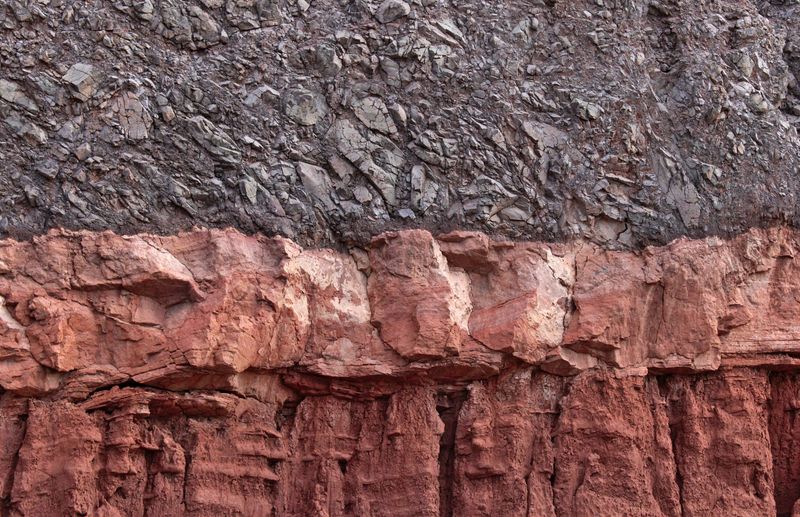
Rocks are mixtures of minerals, so you identify them by texture and composition, not one property. Ask what formed it, and you're halfway there.
Igneous rocks cooled from molten material. Crystal size tells you how fast. Granite has visible crystals because it cooled slowly underground. Basalt and obsidian cooled fast at the surface, so the crystals are tiny or missing entirely.
Sedimentary rocks formed from pieces of other rocks, chemical deposits, or living things. Look for grains you can see, layers, or fossils. Sandstone feels gritty. Limestone fizzes in acid because it's mostly calcite.
Metamorphic rocks were changed by heat and pressure. Many show foliation, a banded or sheeted look where minerals lined up under pressure. Slate, schist, and gneiss are a sequence of increasing heat and pressure. Marble and quartzite are the non-foliated ones.
Build one flowchart for each rock type and put it at the front of your binder. A flowchart is faster than reading paragraphs when you have 20 seconds left.
How to Build a Rocks and Minerals Binder
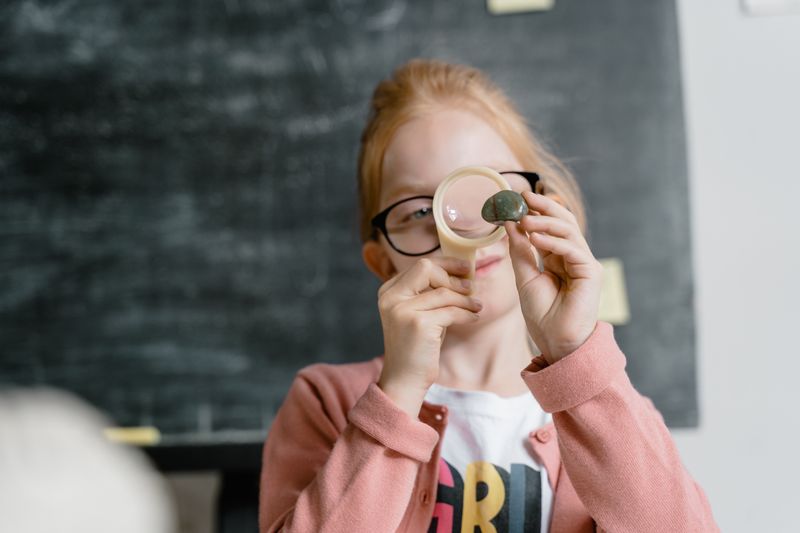
In recent rule sets, each team could bring one three-ring binder of any size, one magnifying glass, and an annotated copy of the national list. Check the current year's rules manual before every season, because allowed materials can change.
"Any size" is a trap. Teams bring 400-page binders and then can't find anything in them. A binder is a search tool. If it takes you 90 seconds to find a page, it's not helping.
What belongs in it:
- One row per specimen on the official list, with hardness, streak, luster, cleavage, and one fact about its use or formation
- Flowcharts for igneous, sedimentary, and metamorphic identification
- A Mohs scale reference with common test objects
- The rock cycle, drawn by you, not printed off a website
- A "mistakes" section with every question you got wrong on a practice test
Here's a position we hold firmly: build your own binder. Copying a top team's binder gets you their pages without their understanding. The student does the work, because that's where the learning happens. You'll find things faster in a binder you made, since you remember making each page.
How to Study for Rocks and Minerals Science Olympiad
A season-long plan for you and your partner:
- Get the official list first. Everything else is built on it. Mark which specimens you can already identify. Probably not many.
- Get real specimens. Photos can't teach you specific gravity or how a streak looks. Science Olympiad links a Ward's Science kit that matches the official list on its event page. If your school can't buy one, ask your science department what's already in the closet.
- Learn 10 specimens a week. Handle each one, run the tests, and fill in its binder row yourself.
- Run timed drills. Have someone lay out 15 random specimens with numbers. Give yourselves 20 seconds each. Track your accuracy every week.
- Take past invitational tests. Science Olympiad's event page hosts practice tests from 2021 to 2026 invitationals. Our Science Olympiad practice test guide explains how to use them without wasting them.
- Split the content with your partner. One of you owns igneous and metamorphic, the other owns sedimentary and ores. Teach each other your half once a week.
- Use a mineral database for gaps. Mindat.org has property data and photos for nearly every mineral, which helps when a test asks about something you haven't handled.
Talk to Your Partner During the Event
Most rocks and minerals science olympiad teams lose points on communication, not knowledge. One partner thinks a specimen is fluorite, the other thinks calcite, and neither says anything. Agree beforehand: whoever is less sure says so out loud, and you run one test together to settle it.
Common Mistakes in the Rocks and Minerals Event
Trusting color. Covered above, and still the number-one reason specimens get misidentified.
Studying only from photos. You'll recognize a perfect museum sample online and then miss the scratched, dusty, half-sized one at the station.
Ignoring the written questions. Teams that only drill ID leave easy points on questions about ore formation, the rock cycle, and how minerals get used.
Spending too long on one station. If you're stuck, write your best guess and move. A blank answer scores zero. A guess sometimes doesn't.
Starting in January. Invitationals start in fall. A team that starts studying when the season starts is already behind the teams that started over summer.
From Event to Real Earth Science Research
Doing well at rocks and minerals science olympiad means you can look at a rock and explain its history. That's the core skill of field geology.
If you like this event, two next steps are worth knowing about. The first is competing beyond Science Olympiad. The International Earth Science Olympiad goes much deeper into geology, plus meteorology, oceanography, and astronomy.
The second is doing your own research. The USGS Mineral Resources Program publishes free data on mineral deposits across the country. You don't need a lab to ask a real question with it. A significant number of ISEF projects in 2025 were done without lab access.
Frequently Asked Questions
What is Rocks and Minerals in Science Olympiad?
Rocks and Minerals is a Science Olympiad event where teams identify and classify rock and mineral specimens and answer questions about geologic processes, Earth's history, natural resources, and how society uses rocks and minerals. It runs in both Division B and Division C for the 2027 season.
What can you bring to Rocks and Minerals Science Olympiad?
In recent rule sets, each team could bring one three-ring binder of any size with information from any source, one magnifying glass, and an annotated copy of the national rocks and minerals list. Always confirm against the current year's official rules manual, since allowed materials can change.
How do you study for Rocks and Minerals Science Olympiad?
Get real specimens that match the official list and practice identifying them by hand, not just from photos. Pair that with past invitational tests to cover the written questions on geologic processes, and build your binder as you go so you know exactly where everything is.
How fast do you need to identify specimens?
Fast. Stations rotate on a timer, so you should aim to recognize a common specimen within 15 to 20 seconds. That leaves time to answer the written questions attached to each station.
What should go in a Rocks and Minerals binder?
A mineral property table for every specimen on the official list, identification flowcharts for igneous, sedimentary, and metamorphic rocks, a Mohs hardness reference, and notes on the topics from past tests you missed. Tabs matter more than volume.
What mineral properties are tested in Science Olympiad?
Expect hardness on the Mohs scale, streak, luster, cleavage and fracture, crystal habit, specific gravity, and special properties like magnetism or a reaction to dilute acid. Color is the least reliable property, since many minerals come in several colors.
Is Rocks and Minerals a good Science Olympiad event for beginners?
Yes. The content is fixed by the official list, so steady study pays off in a predictable way. A beginner who handles real specimens every week can become competitive within one season.
The Bottom Line
Rocks and Minerals is one of the few Science Olympiad events where the content is fixed in advance, which means the team that puts in steady, hands-on hours almost always beats the team that crams. Get the official list, get real specimens, build your own binder, and drill under a timer. Do that from summer on, and you'll walk into invitationals already fast.
If geology has you hooked and you want a project with your own question and your own data, the Aspire Research Fellowship pairs you 1:1 with a PhD mentor and a recent ISEF champion for 12 weeks. It's open to grades 8 through 11, more than 20,000 students have come through Aspire, and the acceptance rate is about 10%.
Apply to the Aspire Research Fellowship →
Ready to build a project of your own? Start with our guide on how to start a research project in high school.