Write it do it science olympiad sounds like the easiest event on the list. Your partner writes instructions, you follow them. Then you get the paper and the first line says "put the blue piece on the other blue piece," and there are four blue pieces. This guide covers how the event works, how it's scored, and the specific writing and building habits that separate top teams from everyone else.
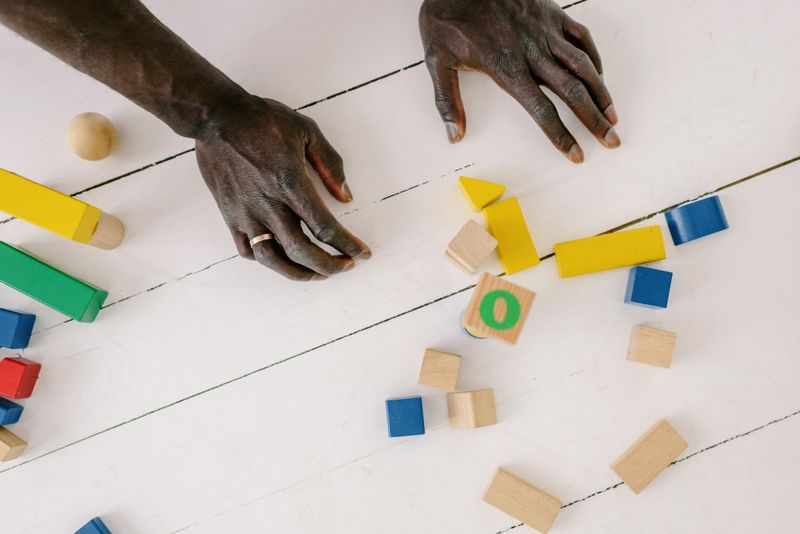
What Is Write It Do It in Science Olympiad?
According to Science Olympiad's official event page, "one participant will write a description of an object and how to build it. The other participant will attempt to construct the object from this description."
That's the whole event. The writer sees the object. The builder never does. All the information has to pass through a sheet of paper.
For the 2027 season, Write It, Do It is a Division B (middle school) event only. Division C doesn't run it this year.
Here's how the two roles compare:
| Writer | Builder | |
|---|---|---|
| Sees the object? | Yes | No |
| Time (recent rule sets) | 25 minutes | 20 minutes |
| Gets | The object, paper, and a pencil | The written description and a matching set of parts |
| Main job | Describe every piece and connection clearly | Follow the words exactly as written |
| Biggest risk | Leaving something out that seems obvious | Guessing what the writer "meant" |
Event leaders provide the object, the paper, and the parts. You bring a writing utensil and nothing else. For a broader look at how events like this fit into a tournament, see our guide on what Science Olympiad is.
Write It Do It Rules You Need to Know
The rules are short, but each one shapes your strategy. These come from recent rule sets and state-level event guides, like the North Carolina Science Olympiad Write It Do It page. Always read the current year's rules manual before your first tournament.
- No drawings, no diagrams, no symbols. Words only. You can use numerals, single letters, and any character you can type with one key, or shift plus one key, on a standard keyboard.
- Define abbreviations inside the description. If you write "LB" for "long blue," you have to say so at the start or the first time you use it. You can't bring a pre-made abbreviation key.
- Closest build wins. The team whose object most closely matches the original takes it.
- Build time breaks ties. If two teams build equally accurate objects, the faster one wins.
The tiebreaker matters more than people think. At a competitive tournament, several teams may build perfect copies. Then it's a race.
How to Write Instructions That Actually Work
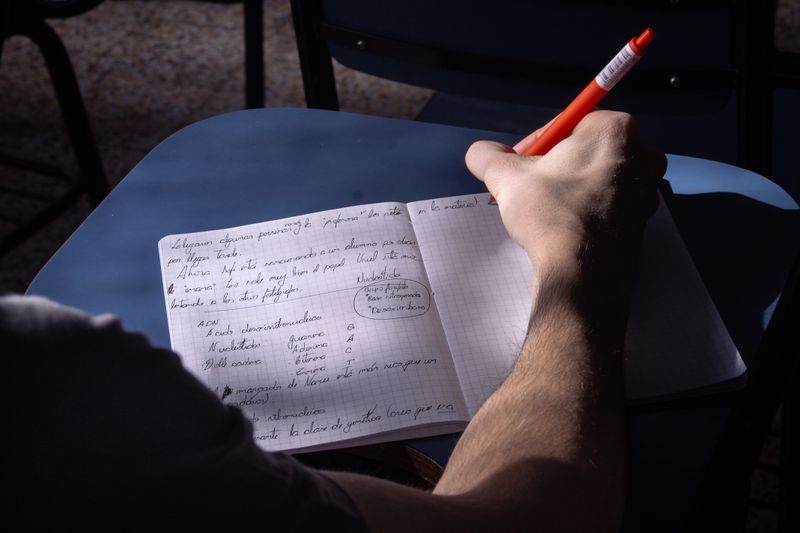
Most writers fail the same way. They describe the object the way they see it, instead of the way someone who has never seen it needs to hear it. Everything below fixes that.
Start With an Overview
Your first two or three sentences should tell the builder what they're making before a single piece goes down. How big is it? How many pieces total? Is it flat, tall, or long? Something like "This is a flat object about the size of your hand, made of 14 pieces, shaped roughly like the letter T" gives your builder a picture to check against the whole way through.
Set Up Directions Before You Use Them
"Left" means nothing unless you've defined it. Pick a fixed reference at the start: "Place the long red piece flat on the table, running left to right in front of you. This is the base. 'Front' means the side closest to you." Now every later direction has an anchor.
Name Every Piece the Same Way Every Time
Give each piece a name built from color, shape, and size, then never change it. If you call it the "small yellow cube" in step 2, don't call it the "little yellow block" in step 7. Your builder will think it's a different piece. This is where abbreviations help. Define them once at the top and use them consistently.
One Connection Per Step
Number your steps and attach one piece per step. Tell the builder which piece, which part of it, and where it connects to something already built. "Attach the short green rod to the top of the base" is not enough if the base has three spots on top. "Attach the short green rod to the middle hole on top of the base, standing straight up" is.
Writing like this is slower. That's fine. You have 25 minutes, and a clear description that runs 20 minutes beats a fast one your builder can't follow.
How to Build From Someone Else's Words
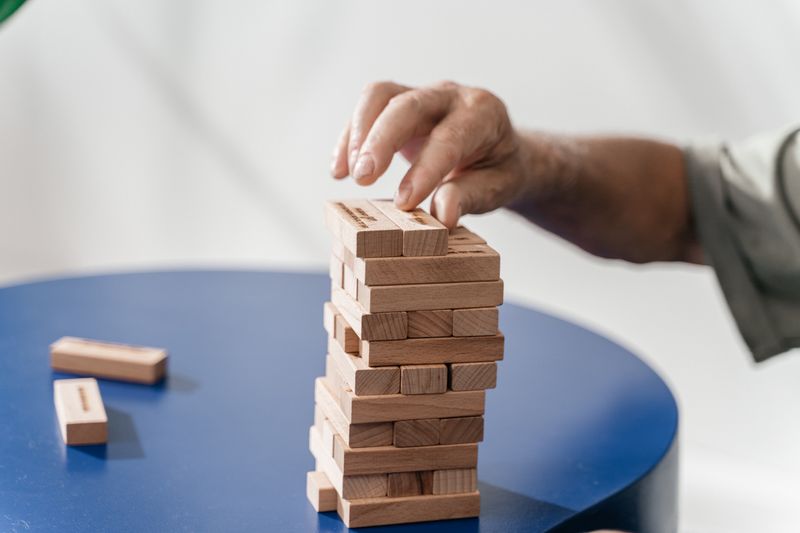
The builder's job sounds passive. It isn't. A good builder can rescue a decent description, and a careless one can wreck a great one.
- Read the whole description first. Take a minute or two before touching anything. You'll catch the overview, the abbreviations, and any later step that changes how you read an earlier one.
- Sort your parts. Group pieces by color and size before you start. It cuts your build time, which is the tiebreaker.
- Follow the words, not your instincts. If the description says the rod goes on the left, it goes on the left, even if right "looks better."
- When something is unclear, use the overview. If step 9 could mean two things, pick the option that matches the overall shape the writer described at the start.
- Check the piece count at the end. If the writer said 14 pieces and you used 13, something got skipped.
How Write It Do It Science Olympiad Teams Practice
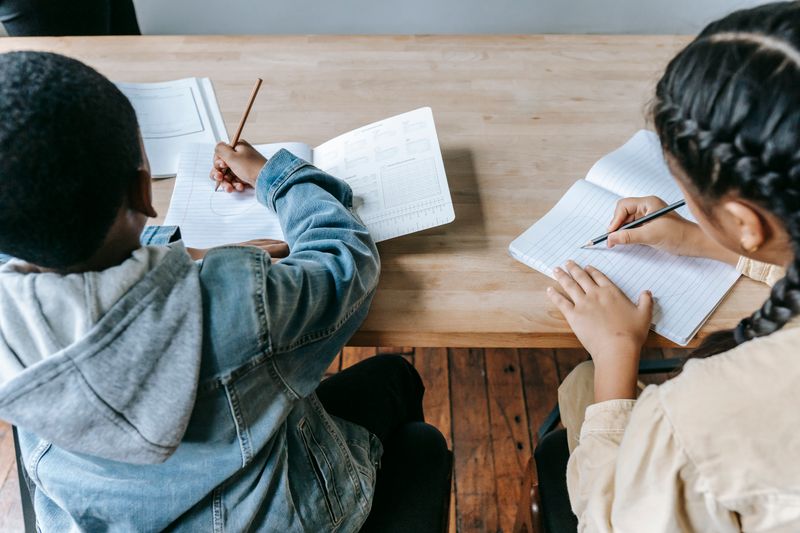
You can't study for this event the way you study for a content event. You practice it. Here's a weekly routine that works:
- Build a parts bag. Mix pieces of different colors, shapes, and sizes. Building blocks, straws, beads, and connectors all work. Variety is the point.
- Have someone else build the object. A coach, parent, or teammate makes a random 10 to 20 piece object. The writer shouldn't design it, because at competition they won't either.
- Write under a real timer. 25 minutes. No extensions.
- Build in a different room. The builder gets only the paper and a matching set of parts. 20 minutes.
- Put the two objects side by side. Find every difference.
- Trace each mistake back to a sentence. This is the step most teams skip. For every wrong piece, find the exact line that caused it. Was it the writer's sentence or the builder's reading?
- Swap roles once a month. Writers get better when they've felt what it's like to build from vague instructions.
Science Olympiad's event page also links invitational practice materials from 2021 to 2026 and a WIDI notes presentation with sample setups. Our Science Olympiad practice test guide covers how to work released materials into your schedule.
Common Mistakes Writers and Builders Make
Skipping the "obvious." The writer stares at the object for 25 minutes. To them, it's obvious the piece is upright. To the builder, it isn't.
Changing names mid-description. "The tall one," "the long one," and "the big one" are three different pieces to your builder.
Accidentally drawing. An arrow or a little sketch in the margin breaks the rules. Even under time pressure, stick to words.
Rushing the build. Speed only matters for the tiebreaker. A slow, correct build beats a fast, wrong one every time.
Not talking during practice. This one is ours. Most students in any team setting fail not because they're not smart but because they don't say when they're stuck. In practice, a builder who reads a confusing step should say exactly why it confused them. That feedback is how a writer gets better.
Why Write It Do It Is Real Science Training
Write It Do It looks like a puzzle game. It's actually the same skill a scientist uses to write the methods section of a paper: describe what you did so precisely that a stranger can repeat it and get the same result. If another lab can't reproduce your work from your writing, the work doesn't count.
That's why we think this event is worth taking seriously even if you plan to focus on lab events later. Our guide on how to write the methods section of a research paper shows how the same habits carry into real research writing. The Digital.gov plain language guide makes the same case for any instructions: one idea per sentence, short words, direct verbs.
Frequently Asked Questions
What is Write It Do It in Science Olympiad?
Write It Do It is a two-person Science Olympiad event. One partner studies an object and writes a description of it and how to build it. The other partner, who never sees the object, tries to build it using only that written description.
How long do you get in Write It Do It?
In recent rule sets, the writer has 25 minutes to write the description and the builder has 20 minutes to build. Check the current year's rules manual, since timing details can change between seasons.
Can you draw diagrams in Write It Do It?
No. Drawings, diagrams, and symbols are not allowed. You can use words, numerals, single letters, and characters you can type with a single key or shift plus a single key on a standard keyboard.
How is Write It Do It scored?
The team whose build is closest to the original object wins, and the written description can't contain drawings or diagrams. Build time is used as a tiebreaker.
Is Write It Do It in Division C?
Not for the 2027 season. Write It, Do It is on the 2027 Division B slate only, so it's a middle school event this year.
Can you use abbreviations in Write It Do It?
Yes, as long as you define each abbreviation in the description itself, either at the beginning or the first time you use it. Prepared abbreviations brought in from outside aren't allowed.
How do you practice for Write It Do It?
Build random objects from a bag of mixed parts, have the writer describe them under a 25-minute timer, and have the builder rebuild them in another room. Compare the two objects afterward and rewrite the exact sentences that caused each mistake.
The Bottom Line
Write It Do It rewards one thing: instructions that work for someone who can't see what you see. Writers win by giving an overview, fixing directions early, naming pieces consistently, and attaching one piece per step. Builders win by reading everything first and following the words exactly. Practice it weekly with real timers, and trace every mistake back to the sentence that caused it.
If you're in 8th grade or older and want to put that precision into a research project of your own, the Aspire Research Fellowship pairs you 1:1 with a PhD mentor and a recent ISEF champion for 12 weeks. It's open to grades 8 through 11, more than 20,000 students have come through Aspire, and about 10% of applicants are accepted.
Apply to the Aspire Research Fellowship →
Want another event that tests the research process itself? Read our guide to Experimental Design in Science Olympiad.